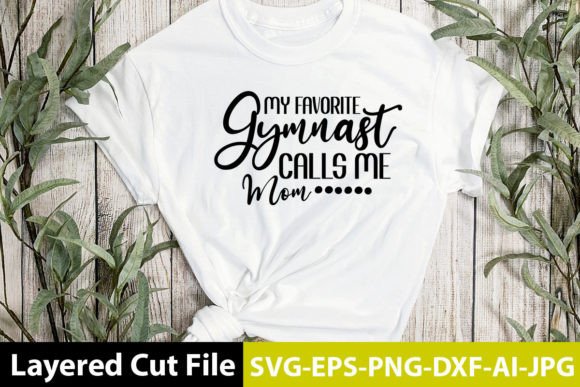
My Favorite Gymnast Calls Me Mom SVG Review
As a professional embroidery digitizer and product reviewer, I approach every new graphic asset with a specific question: will this translate beautifully from screen to stitch? When evaluating the My Favorite Gymnast Calls Me Mom SVG, my assessment goes far beyond the digital preview. For crafters, Etsy sellers, and apparel decorators, the true value of this design lies in its structural integrity when converted into a machine embroidery design. This review breaks down how this specific graphic performs in real-world production scenarios, focusing on the technical and aesthetic considerations necessary for creating high-quality handmade products.
First Impressions and Design Personality
Upon opening the file package, which includes six distinct formats (SVG, PNG, EPS, AI, JPG, DXF), the immediate strength of this design is its clear hierarchy. The phrase "My Favorite Gymnast Calls Me Mom" carries a strong emotional hook that resonates deeply within the gymnastics community. Visually, the layout suggests a balanced composition that avoids being overly cluttered—a critical factor for embroidery. In the world of Graphics and Crafts, simplicity often translates to better stitch definition. The typography appears bold enough to support satin stitch borders or fill stitch interiors without losing legibility at smaller sizes. This visual personality makes it an ideal candidate for custom apparel where readability from a distance, such as in a gymnasium audience, is paramount.
Real-World Application: The Sweatshirt Test
To truly evaluate this asset, I mentally placed it into a current project workflow: creating a premium crewneck sweatshirt for a gymnastics mom boutique item. Sweatshirt fleece is a textured fabric that can swallow fine details. Here, the My Favorite Gymnast Calls Me Mom SVG shows significant promise. The lettering weight appears sufficient to hold a satin stitch column width that sits atop the fabric nap without sinking. For this application, I would recommend converting the vector lines into a dense fill stitch or a medium-weight satin stitch rather than a simple running stitch, which might get lost in the fleece texture.
This design also lends itself well to applique design techniques. If you are looking to reduce stitch count while maintaining a bold look for commercial embroidery, using the SVG outline as a cutting guide for fabric applique is a smart strategy. This not only speeds up production time for small shop products but also adds a tactile, high-end element that customers appreciate in personalized gifts. The layered nature of the file allows for easy separation of elements, making it versatile for both full-stitch embroidery and hybrid cut-and-stitch methods.
Navigating Fabric Challenges and Hoop Limitations
While the design is versatile, experienced makers must exercise caution regarding placement and substrate. Not all fabrics treat text-based graphics equally. When applying this design to stretchy performance wear or thin baby clothes, stabilization is non-negotiable. The density required to make the text pop on a tote bag design differs vastly from what is needed for a delicate onesie. For baby embroidery projects involving this saying, I strongly advise testing on scrap fabric first. You may need to adjust the stitch density or switch to a lighter running stitch font style to prevent puckering or fabric distortion.
Hoop size is another practical constraint. While the digital file scales infinitely, your machine has physical limits. If you intend to use this as an embroidered patch or a left-chest logo on a polo, verify that the aspect ratio fits your smallest hoop without requiring excessive resizing that distorts the letterforms. On curved surfaces like caps, horizontal text layouts can be tricky. Ensure the baseline curvature matches your cap frame, or consider using only the "Gymnast Mom" portion of the text for headwear to maintain clarity. Dark fabrics present their own challenge; always test thread colors against the garment background. A white satin stitch on navy blue requires adequate underlay to prevent the fabric color from bleeding through the threads.
Elevating Product Value and Customer Trust
For Etsy sellers and creative entrepreneurs, the quality of your finished product directly impacts buyer engagement and brand consistency. Using a well-structured vector file like My Favorite Gymnast Calls Me Mom SVG as the foundation for your digital embroidery file ensures clean edges and professional results. Customers can spot a poorly digitized design instantly; jagged edges or gapping registration errors erode trust. By taking the time to properly adapt this graphic—checking spacing, verifying stitch types, and ensuring proper stabilizer usage—you elevate the perceived value of your merchandise.
This design’s sentiment also drives giftability. It is specific enough to feel personal yet broad enough to appeal to a wide demographic of gymnastics families. When listing items featuring this design, use printable mockups derived from the included PNG or JPG files to show potential buyers exactly how the embroidery will look. Accurate representation in your listings reduces returns and increases satisfaction. Whether you are selling the finished sweatshirt embroidery piece or offering it as part of a seasonal holiday embroidery collection, the professional execution of this design signals to buyers that you care about quality.
Essential Designer Notes for Production Success
Before you thread your needle or start your Cricut, adhere to these practical guidelines to ensure success with this asset:
- Verify Licensing: Always confirm whether your purchase includes commercial rights for selling finished products or if it is limited to personal use. This is vital for craft business compliance.
- Test Stitch Density: Do not assume the auto-digitize function will perfectly interpret this SVG. Manually review stitch paths to ensure satin stitches do not exceed 7mm in width to avoid snagging.
- Contrast Checks: Create black and white mockups to test contrast levels before committing to thread colors. What looks good on a bright screen may lack definition on heather grey fabric.
- Stabilizer Selection: Match your stabilizer to the fabric weight. Use cut-away for stretchy knits and tear-away for stable wovens like canvas tote bags.
- File Compatibility: While the package works great with Adobe Illustrator, Cricut, and Silhouette Studio, ensure your embroidery software can import the SVG or EPS cleanly for digitizing. DXF files are excellent for precise line work if other formats fail.
- Wash Testing: If producing items for frequent washing, such as kitchen towels or baby blankets, perform a wash test to ensure the stitch coverage holds up and the fabric does not distort around the design area.
Final Thoughts for Makers and Sellers
The My Favorite Gymnast Calls Me Mom SVG represents a solid foundation for a variety of creative projects, provided it is treated with technical respect. Its strength lies in its relatable messaging and adaptable geometry, making it suitable for everything from quick craft fair items to premium boutique offerings. However, the transition from a digital graphic to a tangible embroidered patch or custom apparel piece requires diligence. By understanding the interplay between stitch type, fabric texture, and design layout, you can transform this vector file into a best-selling product. Remember, in the competitive landscape of handmade goods, your attention to technical detail is what separates hobbyist output from professional craftsmanship. Take the time to test, adjust, and perfect your process, and this design will serve as a reliable asset in your creative business toolkit.