Horse Mom Svg: A Designer’s Embroidery Review
As a professional embroidery designer and product reviewer, I approach every new graphic asset with a specific question: will this actually stitch out well on a finished product? When evaluating the Horse Mom Svg for real-world application, my focus shifts immediately from digital aesthetics to physical execution. This file, described as a ready-to-use vector at 300 DPI with a transparent background, includes both EPS and DXF formats compatible with Adobe Illustrator, Inkscape, Cricut, and Silhouette. However, for those of us in the machine embroidery design space, these vector formats are merely the starting point. They represent the blueprint from which we must build a functional embroidery file. My review assesses this graphic not just as a digital download, but as the foundational art for custom apparel, patches, and handmade goods.
First Impressions and Visual Personality
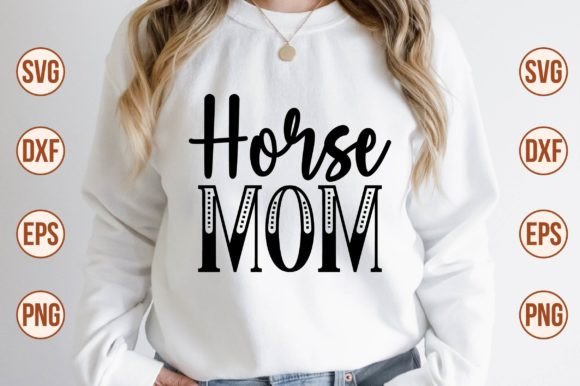
Upon opening the Horse Mom Svg in Adobe Illustrator, the first thing I evaluate is the line integrity and shape definition. For an embroidery project, clean vectors are non-negotiable. Jagged edges or open paths in the source file translate directly to messy satin stitches or erratic running stitches during digitizing. This graphic presents a bold, recognizable silhouette that carries immediate emotional weight for the equestrian niche. The mood is affectionate yet sturdy, avoiding overly intricate details that might get lost when converted to thread.
The layout feels balanced for center-chest placement on sweatshirt embroidery or as a primary focal point on a tote bag design. Because it is a vector, I can easily manipulate the anchor points to simplify areas that might be too dense for fabric. This editability is crucial. As a designer, I appreciate that the Horse Mom Svg does not lock me into a single interpretation. It allows me to adjust the negative space to accommodate different hoop sizes without distorting the core message. The visual personality strikes the right chord for Etsy sellers targeting horse lovers; it is legible from a distance and retains its charm even when scaled down for baby embroidery or sleeve cuffs.
Real-World Application: The Custom Sweatshirt Test
To truly judge this asset, I mentally walked through a recent client commission: a batch of heavyweight fleece sweatshirts for a local riding stable’s holiday merchandise. In this scenario, the Horse Mom Svg serves as the centerpiece. Fleece is a textured fabric that can swallow fine details, so the bold nature of this graphic is an advantage. When planning the stitch types, I envision converting the outer borders into satin stitches for crisp definition against the fuzzy pile, while using fill stitches for the interior body to reduce overall stitch density.
For this specific commercial embroidery project, the transparency of the background is essential. It allows me to layer the design over garment color mockups without needing to mask out white boxes. This streamlines the creation of printable mockups for client approval before a single needle hits the fabric. The compatibility with Inkscape and Adobe Illustrator means I can quickly recolor the vector to match the stable’s branding palette, ensuring brand consistency across their small shop product line. As a personalized gift option, this design offers enough open space within the lettering or silhouette to add a custom name or year, increasing the perceived value of the finished product for the buyer.
Navigating Fabric Limitations and Hoop Constraints
While the Horse Mom Svg is versatile, experienced makers know that not all fabrics forgive poor planning. If you intend to use this for stretchy knit t-shirts or lightweight summer apparel, caution is required. Large, dense fill areas derived from this vector can cause puckering if the stabilizer choice is inadequate. I always recommend testing on scrap fabric first. For knits, a cut-away stabilizer is mandatory to support the stitch structure. If the design is too heavy for the fabric weight, consider modifying the vector to create an applique design instead of a full-stitch embroidery file. This reduces stitch count significantly and adds a mixed-media texture that customers love.
Curved surfaces like caps present another challenge. The horizontal span of the Horse Mom Svg may need adjustment to fit the limited vertical height of a cap frame. Before committing to production, verify your hoop size limitations. If the text elements are too small in the original vector, they may not register clearly as satin stitches on a curved surface. In such cases, enlarging the text or switching to a simpler running stitch outline might be necessary to maintain stitching clarity. Dark fabrics also demand attention; ensure there is sufficient contrast between the thread colors and the garment. A design that looks vibrant on screen can disappear on navy blue fleece if the thread selection isn't deliberate.
Professional Standards for Commercial Use
For creative entrepreneurs and digital product sellers, professionalism hinges on technical reliability. The fact that this file is 300 DPI and vector-based suggests high quality, but you must confirm licensing terms before selling finished items or digital derivatives. Never assume commercial rights; always check the specific license provided with the Horse Mom Svg. Assuming compliance protects your craft business from legal issues and builds trust with your customer base.
When listing products on Etsy or your own boutique site, presentation matters. Use the editable nature of this file to create diverse mockups showing the design on various products, from aprons to pillow covers. However, avoid misleading buyers with digital-only renders. Stitch out a sample whenever possible. Photos of actual embroidered patches or tea towels demonstrate how the design interacts with real fabric texture. This transparency reduces returns and increases buyer engagement. Customers want to see how the satin stitch sheen looks in natural light, not just a flat digital preview. Your reputation as a maker depends on delivering a finished product that matches the promise of the digital asset.
Designer Notes for Optimal Results
Before loading this design into your embroidery software or sending it to production, adhere to these practical checkpoints:
- Vector Audit: Open the EPS or DXF file and check for overlapping paths or stray nodes. Clean vectors prevent jump stitches and machine errors during digitizing.
- Stitch Density Check: Do not rely on auto-digitize settings alone. Manually adjust density based on fabric type. Heavy canvas needs different parameters than baby clothes.
- Thread Color Contrast: Test your palette on both light and dark backgrounds. Ensure the "Horse Mom" text remains legible against the chosen garment color.
- Stabilizer Matching: Pair the design complexity with the correct backing. Use tear-away for stable woven fabrics and cut-away for stretchy or sheer materials.
- Size Verification: Confirm the design fits your specific hoop size with adequate margin for the presser foot. Resize proportionally in the vector stage to preserve line quality.
- Mockup Testing: Create black and white versions of the design to test visibility. If it reads well in grayscale, the contrast will likely hold up in thread.
- Licensing Confirmation: Document your commercial usage rights. Keep records of where and how you are permitted to use the Horse Mom Svg for sales.
Ultimately, the Horse Mom Svg is a strong foundation for equestrian-themed crafts and graphics. Its vector format empowers designers to adapt it for everything from delicate baby embroidery to rugged tote bag designs. By treating this file as a malleable resource rather than a static image, and by respecting the physical constraints of thread and fabric, you can transform a digital download into a high-value, sellable asset. Success in this niche comes from bridging the gap between digital perfection and tactile reality, ensuring every stitch honors the passion of the horse mom community.